
AI Strategy

Almost every business has now rolled out AI in some form.
McKinsey's State of AI 2026 found that 88% of organisations have adopted it. Only 37% can point to any impact on earnings.
That gap is the difference between rollout and adoption. A rollout gives people access. Adoption changes what they do with their working day. When enough of that change adds up, the business starts to work differently. That's what AI transformation looks like in most organisations. It's rarely a programme with a launch date. It's a steady shift in how people work.
The businesses that make that shift have answered six questions, transparently and together. The ones where AI adoption is struggling, have skipped at least one.
The Six Pillars
Vision: Where is AI taking this business, and where shouldn't it?

Opportunities: Where could AI take friction out of the work?

Most businesses arrive at AI with a tool shortlist, or a platform purchase. The better starting point is the work itself. What's slow? What gets redone? What only one person knows how to do? A faster tool on a messy process is still a messy process, and this is a mistake commonly made.
The New York Fed found that AI use at US service firms rose from around 40% to over 60% in a year. Yet among the firms using it, the median share of staff actually using AI was just 17%. The business has adopted AI. Most of the people in it haven't.
The best opportunities come from across the business, not just from the leadership team, because the people doing the work know exactly where the friction is. Judge each one on its value, how feasible it is, how scalable, and how much it will teach the business. The first use case should build confidence as well as save time.
People and Culture: Who can use AI well, who can't, and does the business support them?
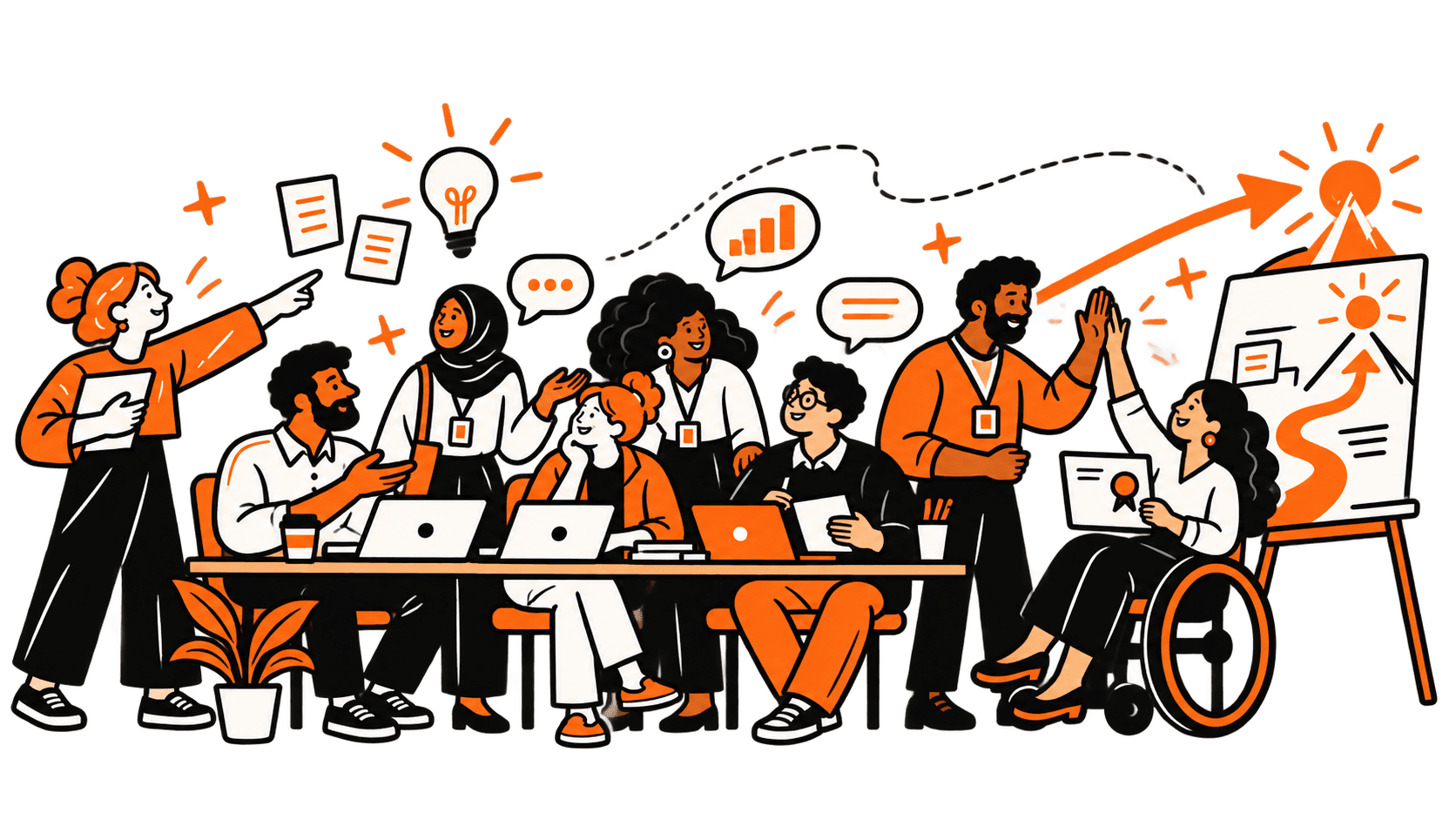
The biggest influence on whether someone uses AI well isn't the tool. It's their manager.
Gallup's 2026 research on AI and workplace culture found that where a manager actively champions AI, 33% of employees say it's transforming how work gets done. Where the manager doesn't, the figure is 4%. And half of HR leaders lack confidence in their managers' ability to lead it.
Then there is the judgement felt around using AI in work. Deloitte found that 31% of UK workers who use generative AI hide it from their employer. People hide what they expect to be judged for. If a business hasn't said that AI use is welcome, many people will assume it isn't.
One 36-person agency ran its AI training as six sessions, built on the tools the team already had and using their real work. People tried techniques between sessions. Across 131 feedback responses, average satisfaction was 4.6 out of 5, and not one response was dissatisfied. The pacing mattered as much as the content. Confidence grows when people have time to try things on work that matters to them.
Tools and Data: What's in use, what's it working with, and what's worth adding?

Ask a leadership team which AI tools the business uses, and you'll get the official list. Ask the team, and you'll get a different one.
Research from the University of Konstanz found that only 55% of the AI tools people use at work were introduced by their employer. Deloitte estimates that UK workers spend around £958 million a year of their own money on AI.
The opposite problem is just as common: licences bought and barely touched. Microsoft has more than 450 million Microsoft 365 seats, and only around 7% of them pay for Copilot. Many of the businesses that have paid can't say how many of their licences are active.
Neither problem is solved by buying more. Start with an honest inventory: what's in use, officially and unofficially, and what data each tool can reach. Unofficial tools tell you what people need. They can also tell you where client data might be going. Both are worth knowing.
Governance: Where are the risks, and what does everyone need to know before using AI?
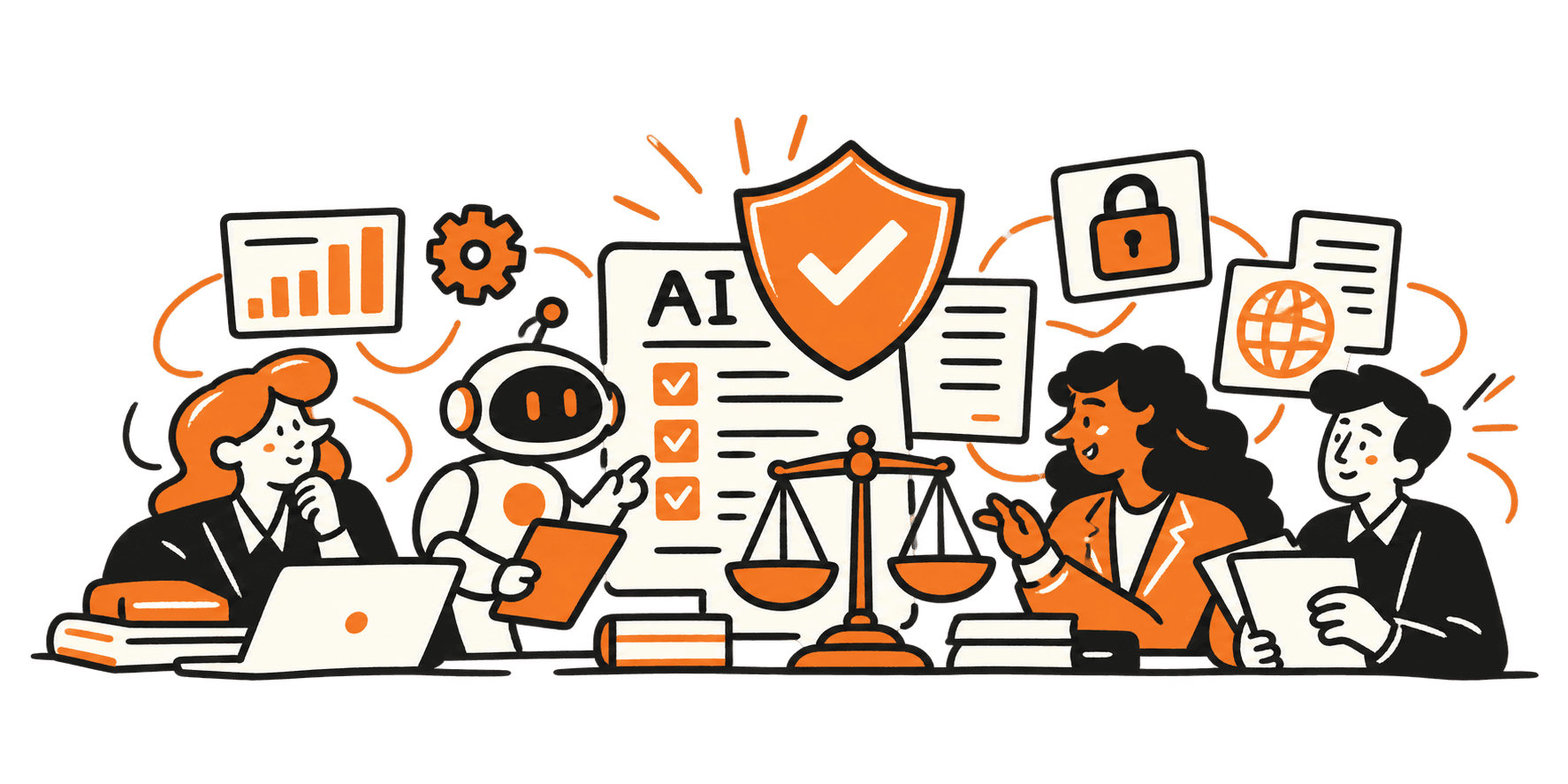
Governance fails in one of two ways. Either there's no policy and everyone makes their own call, or there's a long policy that nobody reads.
Deloitte found that around 1 in 10 UK workers have used AI tools their employer had banned.
What works is proportionate. For most businesses, a one-page position is enough if it covers three things: what data can go where, what needs a human check before it reaches a client, and who to ask when something's unclear. That last one only helps if the answer comes back quickly.
Regulation adds urgency. The EU AI Act's transparency duties have applied since 2 August 2026, including telling people when they're interacting with AI. The rules for high-risk systems have been pushed back to December 2027, which has led some businesses to assume nothing applies yet. It does, for any UK business with EU customers, employees or operations.
Value: How will you know if any of this is working?

This is the question most businesses skip, and it's the one a finance director will eventually ask. Feeling productive and being productive aren't the same thing.
WalkMe's 2026 research found that 90% of workers feel confident using AI, yet only 24.6% get the result they need first time. Half (50.2%) had spent longer on a task with AI than they would have doing it manually. SAP's Value of AI report found 79% reporting rework, delays or backlogs linked to AI.
Value has to be defined before the work starts, not worked out afterwards. For each priority use case, decide what will be measured, what good looks like, and when to check. Sometimes the measure is hours saved. More often it's something harder to count and more important: fewer errors in client deliverables, faster turnaround on proposals, a team that stops hiding how it works.
Sometimes the answer is that something isn't working. That's a useful result, as long as the business finds out in weeks rather than a year later.
Uneven is normal
Rate each question on a simple scale: Unaware, Curious, Active, Capable, Leading. Almost every business is uneven. A business might be Active on tools, Curious on governance and Unaware on value.
That unevenness is the most useful thing a leadership team can learn, because it shows where adoption will stall next.
Transformation doesn't need all six at Leading. It needs each one moving, and the leadership team agreed on which gap to close first. AI will keep changing, so these aren't questions to answer once. The businesses that keep coming back to them are the ones where adoption becomes a different way of working.